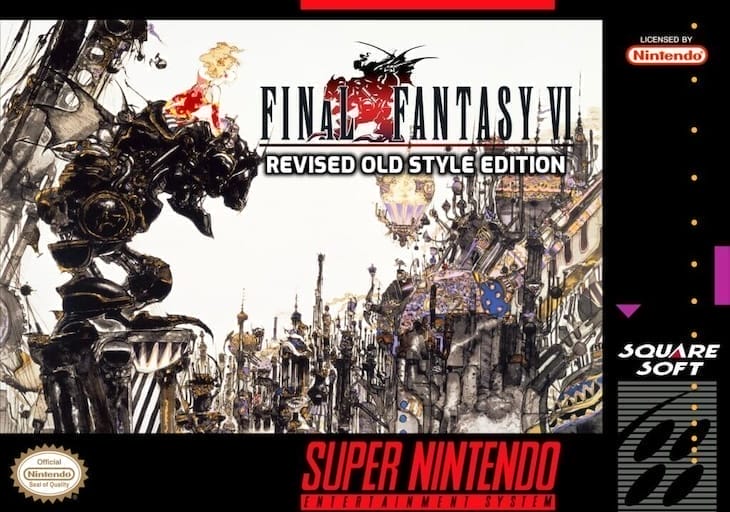
Final Fantasy VI: Revised Old Style Edition
HackFinal Fantasy VI: Revised Old Style Edition (ROSE) is a comprehensive fan-made improvement hack for the SNES version of Final Fantasy VI. It rebuilds the game’s localization from the ground up—merging the Woolsey SNES script, the Slattery GBA translation, and multiple fan translations into a single cohesive version—while integrating a massive bug-fix compilation, restoring censored graphics, and adding numerous quality-of-life features. The goal is not to alter the game’s difficulty or scope, but to present the classic as it might have looked under PS1-era localization standards.
Game Controls
About This Retro Game
ROSE began as a response to a familiar problem: every official English release of Final Fantasy VI carried compromises. The original SNES localization, while energetic, was rushed and constrained by a tight cartridge; the GBA version was more accurate but flattened character voices and suffered from its own technical limits. ROSE does not pick a side—it treats all existing translations as source material and edits them into something that belongs to none of them entirely.
The centerpiece is a script overhaul that resolves long-standing inconsistencies. Character dialects that drifted between scenes are stabilized. Continuity errors are corrected. Speaker ambiguity in generic captions is eliminated through a custom dialogue engine that supports branching and memory manipulation within individual captions—a technical first for FF6 hacking. Enemy and item names, originally capped at 10 and 12 characters, are retranslated at full length, now reaching up to 14 and 16 characters respectively, with only a handful requiring abbreviation.
Under the hood, ROSE is built on C. V. Reynolds’ Bug-Fix Compilation, one of the most trusted repair patches in the FF6 community, and extends it further. Quality-of-life additions include an improved Cancel Button Dash (with a timer penalty for balance), SwdTech Suspend, a fix for the scripted Kefka battle, colored MP healing and damage that does not break the Reflect graphic, and wandering NPCs that are more inclined to move out of the player’s way. Earlier aesthetic changes that proved divisive were dropped in later versions, keeping the presentation closer to the original.
ROSE is not a difficulty mod, a content expansion, or a reimagining. It is an act of restoration and reconciliation—a version of Final Fantasy VI that attempts to honor the Woolsey script’s rhythm while satisfying the demands of accuracy, and in doing so offers what many consider the definitive way to experience the SNES classic in English.
Recommended Based on Your History
Related Retro Games
Final Fantasy IV is a role-playing game developed and published by Square for the Super Nintendo Entertainment System. Released in 1991, it introduced the Active Time Battle system and follows the story of Cecil, a dark knight who journeys to redeem himself. The game features five playable characters with unique abilities.
Final Fantasy V is a 1992 role-playing game developed and published by Square for the Super Nintendo Entertainment System. The fifth main installment in the Final Fantasy series, it introduced the iconic Job System that allowed deep character customization through 22 unique job classes. The story follows four warriors chosen by the Crystals to prevent the destruction of their world.
Final Fantasy VI is a role-playing game developed and published by Square for the Super Nintendo Entertainment System. Released in 1994, it is the sixth main installment in the Final Fantasy series. The game features fourteen permanent playable characters, the most of any game in the series, and combines fantasy with steampunk elements in its setting.
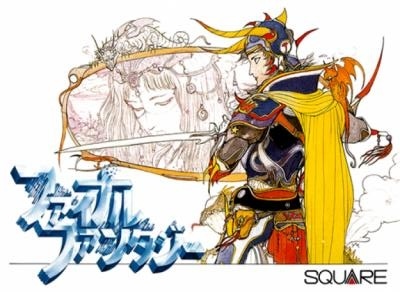
The game that saved Square from bankruptcy and launched one of gaming's most iconic franchises. This NES classic established core RPG mechanics like the job system, turn-based battles, and an epic fantasy narrative.

The groundbreaking sequel that reinvented JRPG mechanics, following four orphans in their rebellion against the Palamecian Empire. Introduced character progression through skill usage rather than levels, and pioneered narrative-driven storytelling in RPGs.

Final Fantasy III introduced the revolutionary Job System that became a franchise staple. Four orphaned warriors of light embark on a quest to restore balance to a world threatened by the Cloud of Darkness, with 22 unique job classes to master.