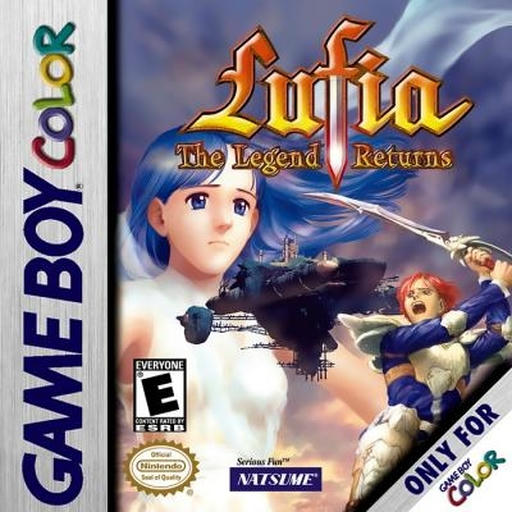
Lufia: The Legend Returns
Lufia: The Legend Returns is a role-playing game developed by Neverland and published by Natsume for the Game Boy Color in 2001. As the third entry in the Lufia series, it tells the story of Wain, a boy who suddenly awakens as a 'Legendary Savior' destined to defeat the four Sinistrals, gods of destruction. Accompanied by a rotating cast of nine spiritual companions—each with their own motivations and side stories—Wain must traverse the world, conquer the Ancient Cave, and confront the truth behind his inherited fate.
Game Controls
About This Retro Game
Released in North America on September 21, 2001, Lufia: The Legend Returns was the first Lufia title developed specifically for a handheld system, and the only one to receive an official release outside Japan for the Game Boy Color. Unlike its Super Nintendo predecessors, the game adopts a vertically scrolling, first-person battle system with an 'IP Gauge' reminiscent of Grandia, where carefully timed commands can interrupt enemy actions. Party management takes center stage, as the player can mix and match three active members from a pool of nine distinct characters, each with unique field abilities.
The Ancient Cave returns as a semi-optional mega-dungeon with 200 randomly generated floors, challenging players to descend with no equipment or experience carried over—a rogue-lite mode years ahead of its time. Outside the main quest, the continent of Molbol offers a sprawling world map filled with hidden towns, optional boss encounters, and character-specific side quests that unlock ultimate weapons and skills. The narrative alternates between Wain's present-day journey and flashbacks to the original Doom Island War, tying the trilogy together with cameo appearances from classic Lufia characters.
While the soundtrack was composed by Yasunori Shiono alongside Akiko Ishibashi, the game's writing leans heavily into comedy, with frequent fourth-wall breaks and slapstick humor contrasting the apocalyptic stakes. Despite its limited release, Lufia: The Legend Returns developed a cult following strong enough to inspire a complete English fan translation patch of its Japan-exclusive sister title, Lufia: The Ruins of Lore. The game also features a New Game+ mode that carries over character levels, making repeat playthroughs of the 200-floor Ancient Cave more accessible.
Recommended Based on Your History
Related Retro Games

Classic turn-based JRPG following warrior Maxim and the mysterious girl Lufia as they battle the sinister Sinistrals. Features puzzle-filled dungeons and a unique monster-catching system using IP attacks.
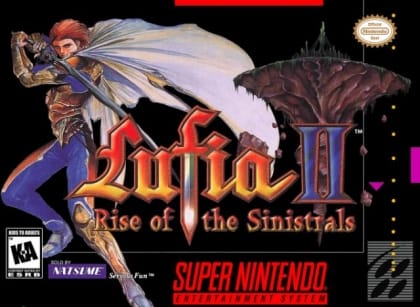
A prequel to 'Lufia & The Fortress of Doom' featuring enhanced puzzle-solving dungeons and the innovative 'IP System' for special attacks. Follows hero Maxim and his party as they battle the god-like Sinistrals before the events of the first game.
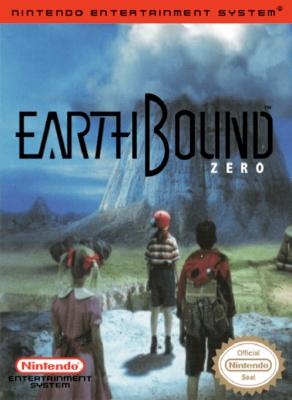
EarthBound, known as Mother in Japan, is a role-playing video game developed by Ape Inc. and HAL Laboratory, and published by Nintendo. The game follows Ness, a young boy with psychic abilities, and his friends as they journey across the world to collect melodies and defeat the cosmic horror Giygas.
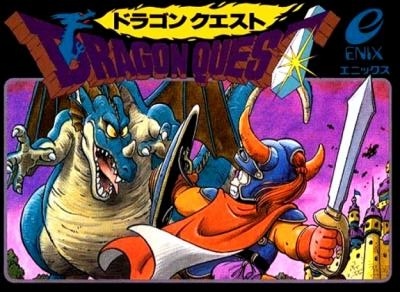
The game that defined Japanese RPGs, Dragon Quest (known as Dragon Warrior in North America initially) introduced core mechanics that became genre staples: turn-based combat, experience points, and equipment progression.
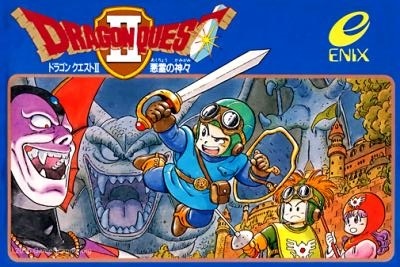
The first JRPG sequel expands the adventure with three playable descendants of Erdrick. Journey across continents to defeat the malevolent Hargon in this groundbreaking title that introduced party mechanics and ship travel to the genre.
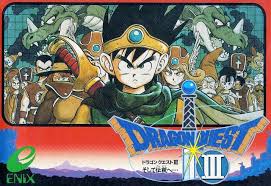
The epic conclusion to the Erdrick Trilogy, Dragon Quest III follows a young hero destined to defeat the archfiend Baramos. Featuring a revolutionary class system and expansive world, it set new standards for JRPGs and remains one of the most influential games in the genre.