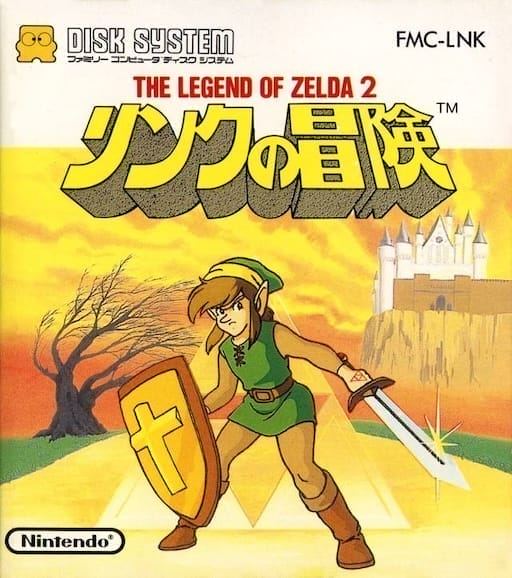
Zelda II: The Adventure of Link
Zelda II: The Adventure of Link, released in Japan as The Legend of Zelda 2: Link no Bouken, is an action role-playing game with platforming elements developed by Nintendo R&D4 and SRD, and published by Nintendo for the Famicom Disk System on January 14, 1987. A direct sequel to The Legend of Zelda, it abandons the pure top-down perspective of its predecessor in favor of a dual structure: a top-down overworld for traversal and side-scrolling, combat-focused areas for towns, caves, and palaces. Players guide a sixteen-year-old Link on a quest to break the sleeping curse placed upon an ancient Princess Zelda by gathering the six crystals and claiming the Triforce of Courage.
Game Controls
About This Retro Game
Several years after Ganon's defeat, a strange crest appears on the back of Link's left hand. Impa, the royal nurse, recognizes it as the mark of the hero destined to awaken the first Princess Zelda, who has slept for generations in the North Castle. Long ago, a prince demanded that his sister reveal the location of the Triforce; when she refused, a wizard cast a spell that plunged her into an eternal sleep, killing himself in the magical backlash. Racked with guilt, the prince decreed that every princess born to Hyrule's royal line would be named Zelda in her memory. Now, with Ganon's followers desperately seeking Link's blood to resurrect their master, Link must restore six crystals to the statues within six palaces scattered across Hyrule. Only then will the path to the Great Palace open, where the Triforce of Courage awaits—and where Link must face the Thunderbird and his own shadow, Dark Link, before the three Triforces can unite and awaken the sleeping princess.
Zelda II is the great anomaly of the series. In towns and palaces, the perspective shifts to a side view: Link can jump, crouch, and alternate high and low sword strikes, while a shield covers his upper body when standing and his lower body when crouching. Defeated enemies yield experience points, and Link can level up Attack, Magic, and Life, with each attribute also conferring secondary benefits such as reduced spell costs or damage taken. Eight spells—Shield, Jump, Life, Fairy, Fire, Reflect, Spell, and Thunder—are learned from wise men in Hyrule's towns, and several are mandatory for progression. The game is famously punishing: limited lives, brutal enemy placement, and a save system on the FDS that equalizes all attribute levels to the lowest value upon game over. Yet its ambition is unmistakable. It introduced the magic meter and Dark Link, both of which became series staples, and its cinematic combat and somber tone gave the fledgling franchise a gravity it had not previously possessed.
Reception has been sharply divided. Shigeru Miyamoto himself later described Zelda II as "sort of a failure," and many fans regard it as the black sheep of the series. Nevertheless, it was a commercial success, selling over four million copies worldwide, and it remains a foundational text for action RPGs that blend platforming with statistical progression. Its influence echoes in later games that dare to diverge from the established formula, and its sheer difficulty has earned it a devoted, if long-suffering, cult following. Zelda II is not the Zelda most players remember, but it is the one that proved the series could survive reinvention—even when that reinvention cut against the grain of everything that came before.
Recommended Based on Your History
Related Retro Games

The groundbreaking action-adventure that defined open-world gaming. As Link, explore Hyrule freely to rescue Princess Zelda from Ganon, collecting items and uncovering secrets.

The radical sequel to The Legend of Zelda transforms the formula with side-scrolling combat, RPG-style leveling, and magic spells. Link ventures through Hyrule to awaken Princess Zelda from an eternal sleep while preventing Ganon's resurrection.

A GBA port of the SNES classic A Link to the Past bundled with the original Four Swords multiplayer adventure. This version includes new features like a color-coded item menu and voice samples for Link.

The final original Zelda title for GBA introduces the magical Minish Cap, allowing Link to shrink to microscopic size. Developed by Capcom's Flagship team, it features kinstone fusion mechanics and vibrant cartoon-style visuals.

The definitive SNES installment that established Zelda's core formula, featuring parallel Light/Dark Worlds, refined puzzle design, and an epic narrative about the Triforce. Revolutionized action-adventure gaming with its non-linear progression and intricate dungeon layouts.

Zelda 3: Parallel Worlds is a legendary and notoriously difficult ROM hack of The Legend of Zelda: A Link to the Past, completely redesigning the game's world, dungeons, puzzles, and enemy placements. It presents a 'parallel' version of Hyrule where familiar locations are twisted into complex, non-linear challenges, demanding expert-level knowledge of the original game's mechanics and relentless perseverance.