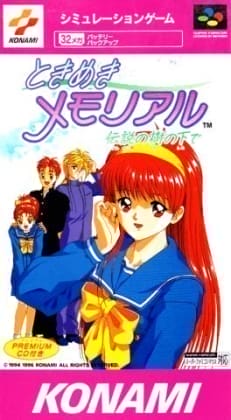
Tokimeki Memorial: Densetsu no Ki no Shita de
Tokimeki Memorial: Densetsu no Ki no Shita de is the 1996 Super Famicom port of Konami’s genre-defining dating simulation, released on a 32-megabit cartridge. Based on the original PC Engine version rather than the enhanced PlayStation release, it strips away voice acting to fit on a ROM—compensating with character-specific mini-games, redrawn softer character portraits, emotion-driven font changes, and a bundled CD containing a radio drama and an all-cast version of the ending theme “Futari no Toki.”
Game Controls
About This Retro Game
The Super Famicom version of Tokimeki Memorial occupies a curious place in the game’s history. It arrived in February 1996, after the PlayStation remake Forever With You had already upgraded the visuals, sound, and interface—yet it was built from the older PC Engine foundation, meaning it lacks the PS version’s added events and player-initiated confession. What it offers instead is a distinct interpretation of the same three-year structure: raise six stats, manage schedules and clubs, avoid the infamous “bomb” gossip system, and hope to be confessed to under the legendary tree on graduation day.
Its most tangible additions are the character-specific mini-games. Each heroine has her own small playable diversion, unlocked by meeting conditions during the courtship process; performing well raises her affection. Character portraits were also redrawn with softer expressions than the original release, giving the SFC version a gentler visual identity. But the cartridge format imposed a severe cost: nearly all voice data was removed. Only a single short line from the previous playthrough’s most-liked girl plays during the initial load—the sole moment a voice is heard.
To soften that loss, Konami introduced a small but memorable touch: certain dialogue lines change font depending on the speaker’s emotion, turning text itself into a performance. The package also included a bonus CD with a full-cast radio drama and a new arrangement of “Futari no Toki” sung by the majority of the heroines rather than Shiori alone. SFC-exclusive secrets—debug menus, a bad ending triggered from the name-entry screen, and even a hidden confession from the gatekeeper Oui—give this port a strange afterlife among fans.
It is not the definitive version of Tokimeki Memorial. It is something more specific: a cartridge-era compromise that, in losing its voices, found new ways to express character through mini-games, portraiture, typography, and the generosity of its bundled audio drama. For players interested in how a genre-defining game adapted to the constraints of 1996 console hardware, Densetsu no Ki no Shita de remains an essential artifact.
Recommended Based on Your History
Related Retro Games

SimCity is a city-building simulation game where players act as mayor to create and manage a thriving metropolis. The SNES version features unique Nintendo-themed content and simplified controls optimized for console gameplay.

A global airline management simulator where you compete against rival CEOs to build the most profitable international airline network during the jet age (1960s-1990s).

A business simulation game where players design, build, and manage their own amusement park. The SNES version features simplified controls optimized for consoles while retaining core mechanics like ride customization, staff management, and financial strategy.

SegaSonic Popcorn Shop is a rare arcade food service simulator featuring Sega's mascot characters. Players assist Sonic the Hedgehog, Mighty the Armadillo, and Ray the Flying Squirrel in operating a popcorn stand, managing ingredients, serving customers, and completing orders under time pressure. The game was exclusively released in Japanese Sega arcades with special popcorn machine cabinets.

The Sims 2 for Game Boy Advance is a unique life simulation game that combines traditional Sims gameplay with RPG elements. Players create and control Sims in a portable adventure featuring story-driven gameplay, relationships, and career progression.

A gritty urban spin-off of The Sims franchise where players navigate city life, join subcultures, and climb the social ladder through mini-games and reputation systems unique to the GBA version.